All Categories
Featured

Boosting Conversion Rates With Dynamic User Experiences
Table of Contents
Increasing CPCs across Search and Shopping indicate that every visitor you lose without transforming represents a growing sunk cost. Show remarketing is how you recuperate that investment at a fraction of the original acquisition expense. Show remarketing is not a standalone strategy. It is the conversion recovery layer of a full-funnel Google Ads strategy.
Display remarketing catches everybody who fell through the cracks., remarketing need to receive a proportional share of invest based on your traffic volume. It is not where you invest the most, however it is often where you get the finest return per dollar.
Audiences decay. Frequency gets stale. Creative stress out. Quotes need modification as list sizes change. This is one of the locations where groas provides outsized value, because its AI agents monitor audience health and project efficiency all the time, while a dedicated human account manager ensures the strategic layer stays sharp.
Why Predictive Forecasting Boosts PPC Success
In 2026, Google Ads supports a number of audience sources for Display remarketing: The easiest approach. Install the Google tag on your site, and Google Advertisements instantly builds remarketing lists based on page check outs.
[target2:anchor_exact1]These audiences sync to Google Advertisements and can be utilized in Display campaigns. GA4 audiences are more flexible than tag-based lists since you can layer conditions like "gone to prices page AND invested more than 2 minutes on website." Upload first-party e-mail lists or phone numbers, and Google matches them to logged-in users throughout its network.
[target2:anchor_exact1]If you have a mobile app, you can develop remarketing lists from in-app occasions like "contributed to wishlist" or "started checkout." For the majority of marketers, a mix of the Google Advertisements tag and GA4 audiences supplies the very best coverage. Consumer Match adds a valuable layer for companies with meaningful first-party information.
You control the imaginative. It works well for service companies, lead generation, and any scenario where you wish to push a single message or offer to returning visitors. instantly produces advertisements featuring the particular product and services a user seen on your website. It needs an item feed (linked through Google Merchant Center for ecommerce) and the dynamic remarketing tag.
If you sell services or have a restricted item catalog, basic remarketing with well-crafted responsive screen ads is the way to go. Google needs a minimum of 100 active users in a remarketing list before it can serve advertisements on the Show Network.
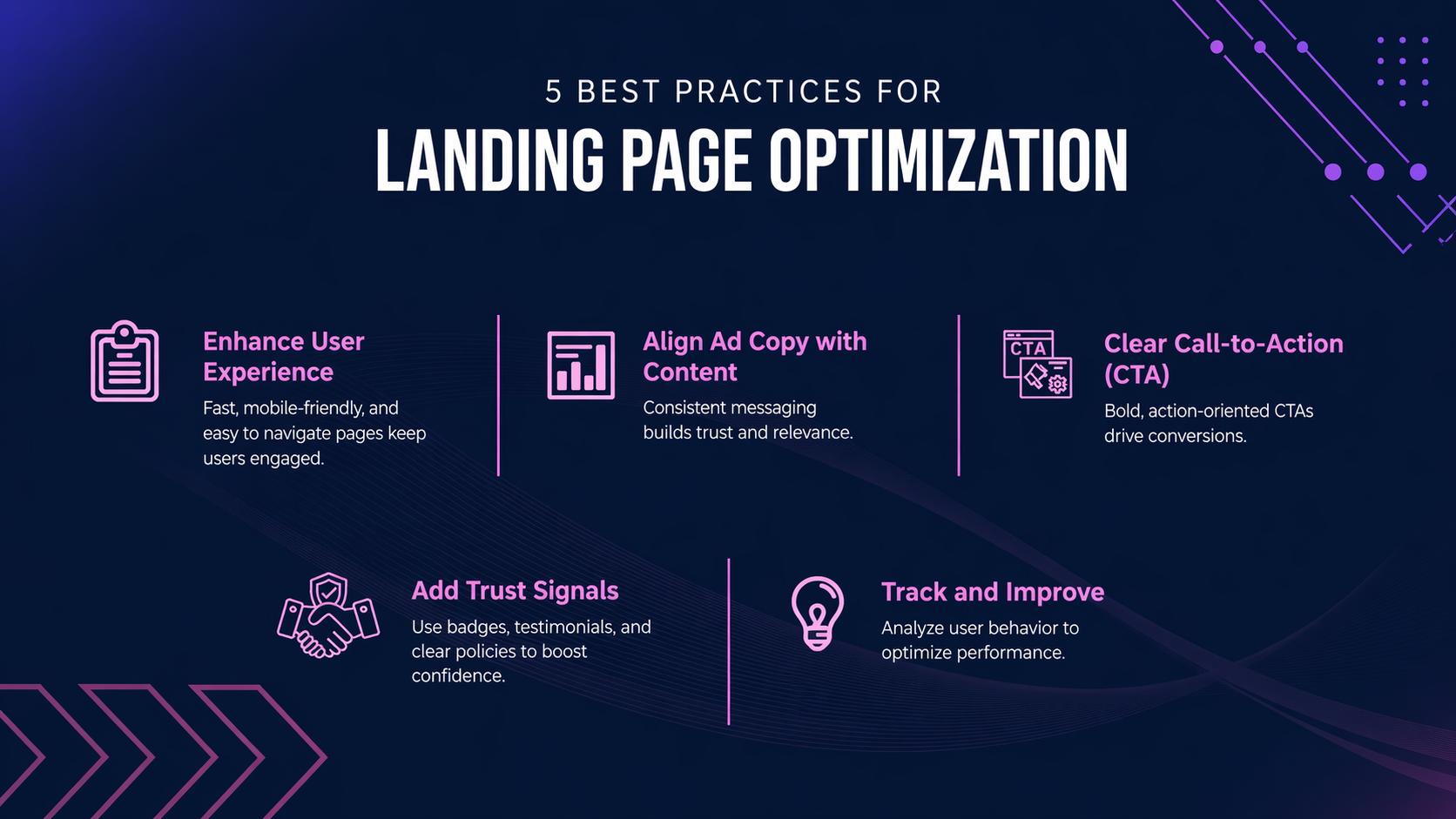
Boosting CRO Via Strategic Landing Page Experiences
That said, small lists produce their own issues. With less than a few thousand users, Google's bidding algorithms have restricted data to optimize against, and you may see irregular efficiency. If your lists are really small, combine sectors rather than splitting them into hyper-granular groups that starve each other of volume.
Somebody who deserted a cart with $200 of products in it is a totally various possibility than somebody who read an article and bounced. Your campaign structure should reflect this. Cart abandoners, checkout abandoners, pricing page visitors, demonstration demand page visitors who did not convert. These users were on the brink of converting.
Services or product page audiences, category page web browsers, users who visited several pages in a session. These users showed real interest but had actually not devoted to a particular action. Homepage visitors, blog site readers, single-page-session visitors. These users are aware of you however offered very little buying signals. Remarketing to them can work, however at lower bids and with broader messaging.
Exemption lists are just as crucial as your targeting lists. Without them, you lose budget revealing advertisements to people who have actually already transformed, or you annoy users who are not worth re-engaging.
For a SaaS business, that might be 90 days. For an ecommerce store selling consumables, it may be 2 week. This sort of audience health is tedious however crucial, and it is among the lots of functional details that slip when a freelancer or stretched-in-house team is managing your projects.
Advanced Performance Growth Tactics for Scale in 2026
Frequency topping limits the number of times a single user sees your ad within an offered duration. Without it, remarketing ends up being harassment. An affordable starting point for Show remarketing is 3 to 5 impressions per user each day. High-intent audiences can tolerate a little more because the ads feel pertinent. Low-intent audiences should be capped lower.

Latest Posts

How to Lower Costs Using AI Modeling
High-Impact Paid Growth Marketing Tactics for the US
Proven CRO Tactics to Boost Your ROI